

Raw or Cooked? How to Enjoy Olive Oil the Right Way
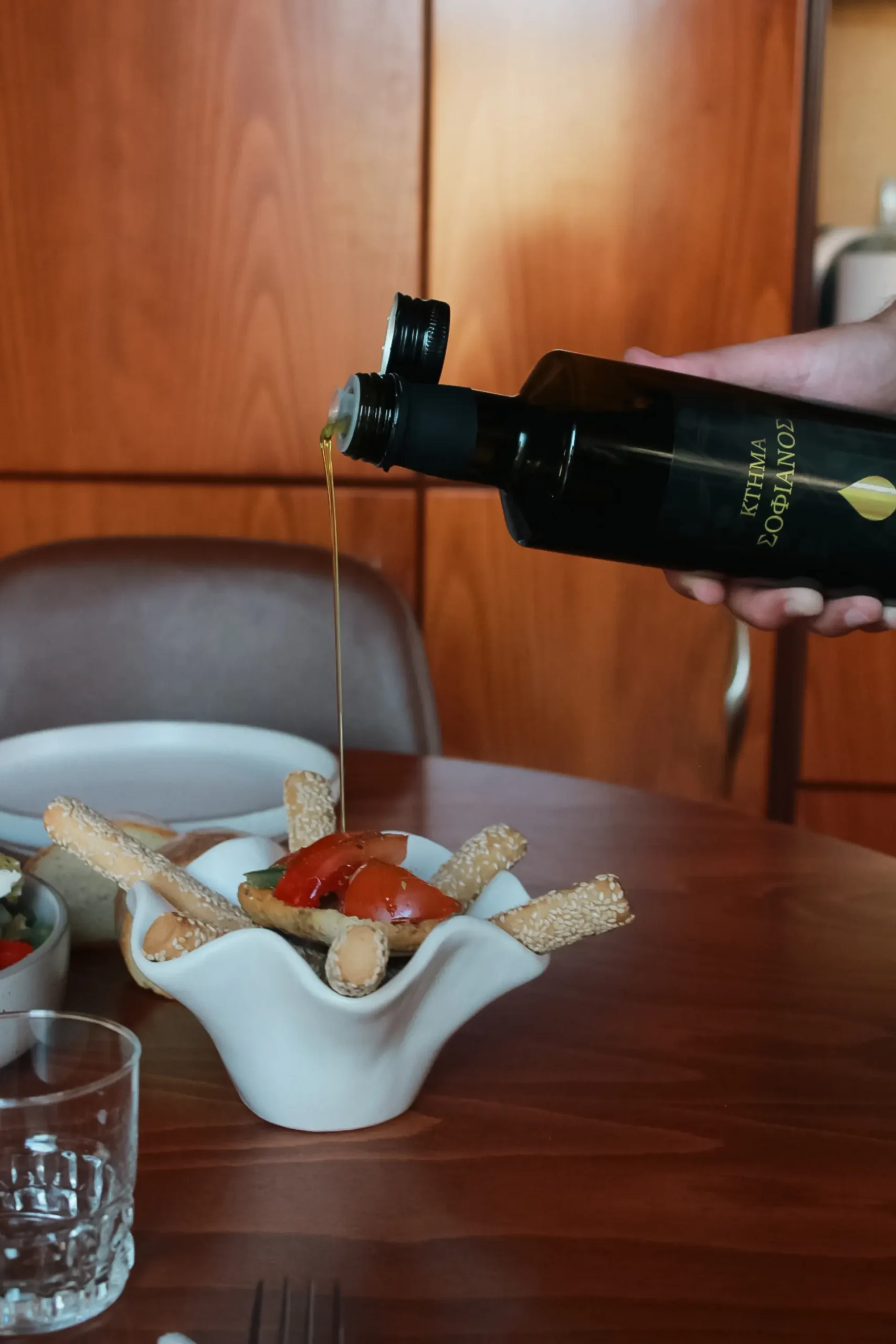
There's a moment at every Greek table that stands out: oil slowly drizzling over fresh tomatoes, breadsticks, and a few herbs. It's not just a finishing touch — it's the peak of flavor.
Why Raw Oil Makes the Difference
Extra virgin olive oil reveals its full complexity when consumed raw. Its aromatic notes — fruity, peppery, with a slight peppery kick at the back of the throat — are partly lost when exposed to high heat. That's why chefs recommend adding it at the end: over salads, bread, pasta, or even soups, just before serving.
A Simple Ritual
It doesn't take anything complicated. A few tomato slices, some breadsticks, a pinch of oregano — and a generous pour of olive oil from above, letting it spread evenly and reach every corner of the plate. It's a small ritual that turns the everyday into something special.
The Choice Makes the Difference
Not all olive oils behave the same way when consumed raw. A fresh, low-acidity extra virgin olive oil, like the Koroneiki variety from Ktima Sofianos, retains all its fruity intensity and the characteristic peppery kick — a sign of its high polyphenol content.
Try it over a simple tomato salad with breadsticks, and let the flavor speak for itself.